
Stumbled upon this great piece of beatboxing…
last month in a nutshell
It has been a very busy four weeks since I last posted something. Here are some highlights:
- the first stage of the Infant Imaginings project drew to a close. Helene Hugel and I have been working on a number of fifteen-minute pieces for babies (between three and twenty-four months) over the past while and we presented them last week in Tallaght Community Arts Centre and in a health clinic. All being well (i.e. if the funding comes through!) we’ll be developing our work further in the second half of next year.
- I met a singer-songwriter who I really enjoyed – Audrey Ryan, from Maine. The first time was at a singer-songwriter night in The Stables in Mullingar where I was playing with Hamlet. It was Halloween, she played ‘The Monster Mash’ (it caught on in a flash, for your information). Second time was at The Song Room the following week and she’d been up all night watching Obama win the election.
- I did a schools project in Navan and wrote a lovely song for the kids to sing (which I’ll post soon).
- New Dublin Voices did two concerts which featured the beautiful choral music of Jaakko Mäntyjärvi, a Finnish composer. The choir sang one of his pieces last year, the exquisite Die Stimme des Kindes, and we reprised that and two of the works that helped make him one of the very best composers writing for mixed voice choirs today: Canticum Calamatatis Maritimae and Four Shakespeare Songs. I urge you to download this stunning version of Die Stimme des Kindes performed by the all-male American choir, Chanticleer.
- Hamlet played his Bewley’s theatre gig to a nicely-packed room backed by ‘The Handsome Strangers’ – me on keys/cajon/backing vocals, Barry Rycraft on double bass and Satya Darcy on drums. There are some videos on Hamlet’s Facebook group, which you can join for updates on his musical adventures. Next on the horizon is the recording this weekend of his debut EP…
Whinging about iTunes
I followed a link to this album, which was featured on the iTunes Store front page…
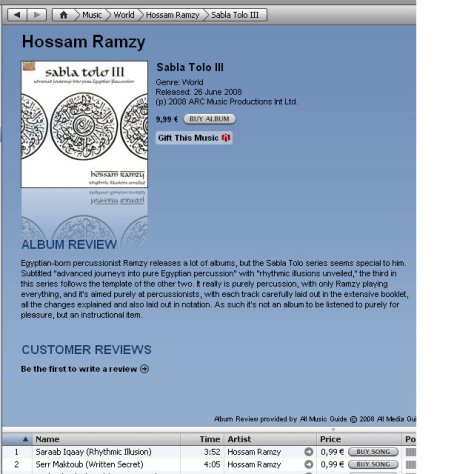
Here’s what I posted to iTunes, although I suspect it may not be published:
If the blurb is anything to go by, this release is designed to be listened to with the accompanying booklet. iTunes doesn’t supply it, so why would I buy this from iTunes? I would *love* it if all albums were shipped with digital booklets. This release seems to show up the poorer experience that we’re being given by iTunes when album booklets aren’t shipped with the music. Why does the product have to be dissected for digital release?
I certainly can’t see any point in buying this release digitally from iTunes, when I’d be missing out on the fascinating-sounding booklet that the artist has prepared. To another retailer, methinks…


music and video, chocs and blood
Yesterday Hamlet and I went into the MUZU TV studio to record a video for their site (to be released at some pertinent date in the future). I arrived in first, bearing my spine-compressingly-large keyboard up to the second floor, and was greeted by the amiable Martin who furnished me with a cup of tea. He was taking a straw poll at the time – Roses or Quality Street? 
 My bid for Quality Street was overturned and, a short while later, a tin of Roses appeared to the general delight of all. I notice Cadbury’s have banished foil completely, allowing for easier access to such delights as the caramel barrel. I happily munched away on fistfuls of chocolatey goodness despite holding firm to my conviction that Quality Street is a more interesting mix of sweets. Truly stalwart stuff on my part, you’ll agree.
The video recording was really laidback and the guys made our visit really enjoyable. We recorded ‘I am a man’ and ‘El Capitane’ and then Hamlet was interviewed by one of the editors of the marvellous (and now free) State magazine, Phil Udell. The MUZU TV site has loads of really great archive video footage on it as well as all the latest stuff and Phil asked Hamlet to have a look for a video he’d like to talk about to camera. They happened on an interview David Bowie did with Russell Harty which was just fascinating. The subtle tension and awkwardness as Harty repeatedly goads Bowie with provocative assertions is remarkable in this age of nonsense-talking TV interviewers.
I had a look at the site today – The Ting Tings’ channel shows off the inventive videos to their infectious songs; old interviews with Sting, Andy Summers and Stuart Copeland (seperately) on The Tube oozing attitude and talking about their various non-Police dalliances; Paula Yates interviewing Michael Hutchence; Zoe Conway stunning the crowd at the Balcony TV awards – there are armloads of gems to discover.
I picked up a copy of State, too. I like their layout (amazingly devoid of excess advertising) and the quality writing about music and (almost) nothing else. The rating system in the reviews section is good, too, using a kind of temperature gauge instead of any numbers, stars or anything so quantifiable. I bought Messiah J & The Expert’s new album, ‘From the word go’, on the back of reading the review.
On Wednesday I played a solo set at The Song Room (Trust you, The boy who cried wolf, Radiohead’s Backdrifts, Face in a frame, and Kings of Leon’s Sex on fire). Hamlet’s guitar was in surgery after sustaining a nasty injury at last week’s Song Room so he used mine for his set. The slight difference in the dimensions of our guitars coupled with Hamlet’s masochistic playing style meant that my brand new strings got a bit of a respray…
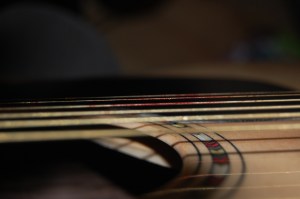


couldn’t see any other way
The other day I was listening to two CDs that I haven’t heard in ages: Sgt Pepper’s Lonely Hearts Club Band by The Beatles and Things Fall Apart by The Roots.
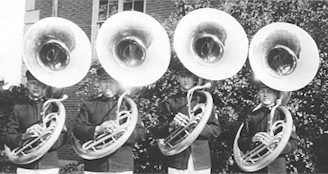
I saw The Roots play a superb set at Electric Picnic at the end of August, complete with Sousaphone player. The thing that has always separated the band from the rest is their totally live performances; they grew up busking on the streets of Philadelphia and none of the sounds they produce on stage are pre-recorded or samples. I love that they’ve found this incredible Sousaphone player who can beef up the bass line with a brass instrument that was named after John Philip Sousa, the composer of such famous marches as The Liberty Bell (the Monty Python theme tune) and The Stars and Stripes Forever.
The very end of The Beatles’ wonderfully fresh album (just listen to the reprise of the title track or Lovely Rita for a reminder) has a number of famous elements: the orchestral climax and crashing piano chord at the end of A Day in the Life; the high-pitched frequency, designed to annoy dogs but perhaps a useful benchmark of youthfulness (“well, I can’t be that old if I can still hear the squeal at the end of Sergeant Pepper…!”)? The vinyl record finished with a concentric groove containing a loop of spliced-together studio sounds. What I hear emerging is the phrase I’ve used for the title of this post. The effect is somewhat diminished by hearing the album on CD, which plays only a few seconds of the loop. On vinyl you would have had to physically lift the needle out of the groove to stop it. The CD runs only slightly shy of forty minutes – why didn’t they just fill the rest of the disc with the loop?!
The last named track on Things Fall Apart is the Ursula Rucker piece ‘The return to innocence lost’, an intense, heart-breaking poem describing someone who couldn’t see any other way. The haunting accompaniment underpins the text beautifully.
An album to make grown men cry
This morning I listened to Elbow’s Mercury prize-winning album, The Seldom Seen Kid. It was easily one of the most sustainedly moving listening experiences I’ve had in a long time. About halfway through I was so excited about writing this post that I had to make a conscious effort to keep listening and not start writing. Isn’t that quite typical of our times? Karl Spain jokes about it in relation to our digital photo habits:
CLICK. “Here, give us a look!” Sigh. “Ah, we were happy then…”
One of the thing’s mentioned on Elbow’s rather beautifully designed website about The Seldom Seen Kid is that the album was conceived very much as a whole and not as a collection of tracks. (The shift, much lamented in some circles, towards consuming music in track-sized pieces is not good or bad but it does allow outstanding examples of the album format to shine, as in this case.) This is also evident in the way the album artwork is designed. It takes the form of an illustrated book, the lyrics presented in a string rather than in the more customary line-by-line way.
The experience of clicking through the digital booklet that comes with the (€6.99!) download of the album from iTunes was very pleasurable, the full-screen PDF format rendering the images at glorious LP size and the text at a readable point size. Why, oh why can’t all albums sold on iTunes come with something like this?
Singer Guy Garvey writes all the lyrics and some of his turns of phrase are just gorgeous, like this one from Weather to fly :
So in looking to stray from the line we decided instead we should pull at the thread that was stitching us into this tapestry vile and why wouldn’t you try?
His unaffected voice, which he sends soaring every once in a perfectly judged while, is one of the most emotive in music. The band’s playing on this recording is exquisite and, following the principles of the ‘Turn Me Up!’ movement, is recorded at a lower level to allow a wider dynamic range.
Having sold out their first Dublin date, in the Ambassador on the 27th October, another has been announced for the following night. I saw their very impressive set at Electric Picnic and will certainly be going along to hear this beautiful, deservedly accoladed album played live.
New term
September is the real turning point of the year – the beginning of the new school term. It would be interesting to know why it was settled on that children would begin/resume their studies in the first month of autumn. My immediate thought was that it probably has to do with the agricultural calendar, like a lot of our conventions (for example, the clocks falling back and springing forward). It surely would have been more useful to have all available helpers on the farm at harvest, though, rather than reading, writing and arithmeticking…?
For me, the new term brings with it some new opportunities: I’m working with Helene Hugel, a puppeteer and clown doctor, and mentor Tim Webb, director of children’s theatre company Oily Cart, on a project for children between 6 months and 2 years old; I’ve also devised a ‘Magic Moment’ that our choir, ‘New Dublin Voices‘, will perform as part of the Dublin Fringe Festival next week.
There are a dozen ideas/resolutions that I want to pursue and develop, too:
• A generative composition (i.e. one based on an algorithm or set of rules);
• A piece of podcast theatre;
• Talks for fledgling concert-goers;
• Going to ten symphony orchestra concerts during the year and blogging about them;
• Devoting a lot more time to practicing the clarinet with a view to joining an orchestra or band;
• Recording the wedding music I’ve written to date and promoting that side of my work.
Also, having attended the Association of Irish Choir’s choral conducting course in August, I want to see if there are any opportunities to do some work with a choir…
That’s probably enough to be getting on with!
Listen carefully, you will hear this more than once
I experienced something of a revelation this lunchtime. I’m reading Norman Lebrecht’s book about the history of classical music recording, Maestros, Masterpieces & Madness, and found myself very moved by his descriptions of one hundred milestone recordings. The importance of the people performing, the time and the place.
I found myself wanting to hear music performed, to share in the absolutely unique event that each performance of a work constitutes; a communication of the performer’s feelings to the audience. As much as I want to hear the recordings that Norman Lebrecht compellingly chronicles, they can only make sense as part of a larger picture. It seems impossible to know a piece of music by hearing only one performance of it – one interpretation – no matter how many times. (One thing that recording has helped reveal to us is that, even though the performance we’re listening to may be in every way precisely the same as the last time we listened to it, we have changed and it is the change in us that is revealed, the recording acting as a mirror. This role of art would have been historically fulfilled by painting, sculpture or architecture, music and drama having to wait for the advent of recording to be scrutinised in this way.) It also strikes me as imperative that musicians perform pieces without music in front of them. The physical ‘text’ between performer and audience seems an insurmountable barrier to true communication, rendering the attempt as ineffectual as an actor standing on stage and reading from their copy of the script. It is usual and acceptable for ensembles of instrumental musicians to use music, for example string quartets or orchestras. I’d be interested to experience performances by ensembles who give concerts without any music stands. (Choirs are not generally permitted this indulgence although choir pieces do tend to be shorter than the average chamber music movement.)
Listening to recordings and going to concerts needs to be practiced and not just reserved for special occasions. I very much enjoy reading novels and it strikes me that I probably spend far more of my time doing that than attentively listening to music. Culture is not just what is around us, it is the things that we spend our time doing. Just because I did a degree in music it doesn’t automatically follow that I am ‘musically cultured’. Something of a revelation, indeed…
Sound admonishment

Back in 2004 I went to a Bill Hicks tribute night in a pub in Temple Bar. They showed a couple of Hicks’s recorded stand-up shows as well as some documentary and interview material and we all sat – on the ground, mostly – and watched and laughed. I don’t keep a diary but I’ll occasionally note down something that has an impact on me. That night I wrote one sentence: “Play from your fucking heart!”.
A significant thread of Hicks’s material stemmed from his love of music and his disgust at the cynically marketed stuff that is presented as music in the mainstream. He screamed that sentence with utter conviction and it shook me. I couldn’t sit back and chuckle smugly, as I could when he vilified people in advertising or politicians. This was me, as a musician, that he was raging at.
I read a post today by another great cultural commentator with a love of music, Seth Godin. He urges us, with less of Hicks’s white heat but with no less passion, to Sing It. “If,” he writes, “you’re going to go to all the trouble of learning the song and performing it, then SING IT. Sing it loud and with feeling and like you mean it.”
My first podcast
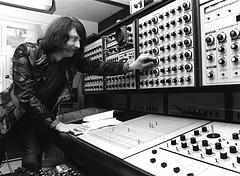
I played a set at The Song Room last week, 23 July, and thought I’d record the same songs for the website.
I did a bit of talking between the songs, which I edited today…quite an illuminating exercise! Lots of little vocal clicks, tics, habits and halations. (Unfortunately for my alliterative ambition, ‘halations’ isn’t actually the blanket term for exhalations and inhalations, instead having something to do with photography. If anyone knows what the word is – if one exists at all – for breath noises, be they in or out, please share.)
Click on the link on the ‘Any requests…?’ page to listen to the podcast. If you like what you hear, please consider throwing a few coins my way by clicking on the ‘Make a donation’ button.
Let me know what you think of the podcast, so I can improve things for the next one.
 jay wilson :: music